Share your thoughts in a quick Shelf Talk!
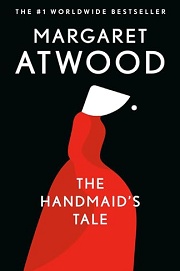
The Handmaid's Tale by Margaret Atwood
In a theocratic regime that controls every aspect of women’s lives, one woman clings to memory and the fragile possibility of resistance. Haunting and indelible, The Handmaid’s Tale is a landmark dystopia that echoes with urgency and quiet fury.
Have you read this book? Share what you liked (or didn’t), and we’ll use your answers to recommend your next favorite read!
Love The Handmaid's Tale but not sure what to read next?
These picks are popular with readers who enjoyed this book. Complete a quick Shelf Talk to get recommendations made just for you! Warning: possible spoilers for The Handmaid's Tale below.
In The Handmaid's Tale, did you enjoy ...
... the chilling, systemic oppression of women under a theocratic regime—and how shifts in power expose society’s fault lines?
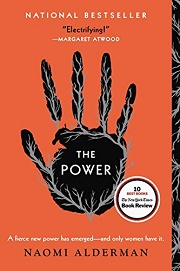
The Power by Naomi Alderman
If the Commanders, the Eyes, and the ritualized "Ceremony" in The Handmaid’s Tale drew you in for how they reveal power’s corrosive nature, The Power flips the current: teenage girls develop a lethal electrical ability that upends patriarchy. Watching Roxy and Allie (who becomes "Mother Eve") build movements, manipulate faith, and weaponize myth mirrors how Gilead fused scripture with control. Like Offred’s glimpses of Jezebel’s and the Wall, Alderman stages shocking set pieces to show how institutions quickly bend morality—and how fragile justice is when force and doctrine entwine.
... the claustrophobic, single-woman lens inside a biopolitical system that treats bodies as state property?
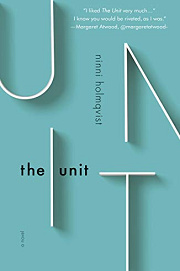
The Unit by Ninni Holmqvist
If living under Aunt Lydia’s rules at the Red Center and the suffocating domestic bargain with Serena Joy gripped you, The Unit narrows the focus even further. Dorrit Weger enters a pristine "unit" where the state harvests the bodies of the "dispensable" for experiments and organ donation. The intimate, day-to-day rhythms echo Offred’s quiet acts—stealing moments, parsing coded conversations, weighing dangerous hope—while the clinical compassion of the facility recalls Gilead’s polite brutality. Like Offred’s tense meetings with Ofglen and Nick, Dorrit’s small relationships become life rafts in a cage.
... the layered, time-jumping structure that braids past and present to deepen dread and meaning?
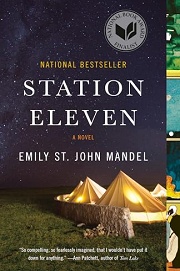
Station Eleven by Emily St. John Mandel
If Offred’s memory-driven leaps—from Gilead to her former life with Luke and their daughter—hooked you, Station Eleven uses a similarly resonant mosaic. It shuttles between pre- and post-pandemic timelines, letting moments echo across decades. As Kirsten follows the Traveling Symphony and crosses paths with the Prophet’s cult, the book’s non-linear reveals land like the "Historical Notes" epilogue in Handmaid’s, reframing what you thought you knew. The payoff comes in how small tokens (a paperweight in Gilead; a comic book here) become anchors of identity and resistance.

... the quiet, confessional voice that unveils a controlled life through memory and small rebellions?
Never Let Me Go by Kazuo Ishiguro
If Offred’s hushed, confiding narration—her secret name, her careful parsing of the Commander’s Scrabble games and Serena Joy’s bargains—moved you, Never Let Me Go offers a similarly intimate confession. Kathy H. recalls Hailsham, Ruth, and Tommy with a deceptively calm voice that slowly exposes an unsettling purpose behind their upbringing. As with Offred’s measured risks (the whispered "Mayday," the illicit hotel tryst), tiny choices carry enormous moral weight. The emotional punch arrives not from revolution but from recognizing the limits placed on a life—and loving within them anyway.
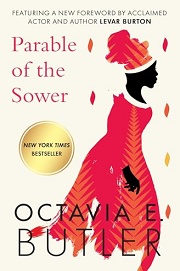
... the blend of faith, scripture, and survival as tools for resisting a collapsing, violent society?
The Parable of the Sower by Octavia E. Butler
If Gilead’s weaponized scripture and the Salvagings’ ritualized violence fascinated and horrified you, Parable of the Sower counters with a faith forged for liberation. Lauren Olamina’s Earthseed verses punctuate her flight from a burned-out Robledo, much like Handmaid’s uses biblical language to justify coercion—only here scripture becomes a means to rebuild community rather than control it. Lauren’s hyperempathy and hard choices echo Offred’s quiet pragmatism: both navigate predatory systems, gather allies on the road, and treat belief as something lived, not merely recited.
Unlock your personalized book recommendations! Just take a quick Shelf Talk for The Handmaid's Tale by Margaret Atwood. It’s only a few questions and takes less than a minute.