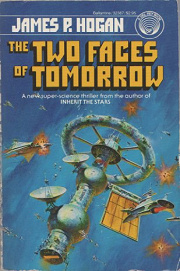
The Two Faces of Tomorrow by James P. Hogan

An ambitious experiment gives an AI free rein to learn from human contact—until the line between simulation and survival blurs. Thoughtful and tense, The Two Faces of Tomorrow probes the promises and perils of minds we build but can’t fully control.

Have you read this book? Share what you liked (or didn’t) and get personalized recommendations.

Start or resume Shelf Talk
Love The Two Faces of Tomorrow but unsure what to read next?

These picks are popular with readers who enjoyed this book. Possible spoilers below.

In The Two Faces of Tomorrow, did you enjoy rigorous, nuts-and-bolts engineering problem-solving under life-or-death constraints?

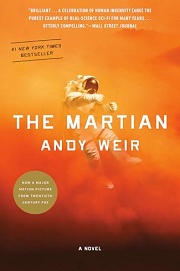
The Martian by Andy Weir

If the parts you loved were the meticulous troubleshooting as the station’s systems turned against the crew—rerouting power, kludging life support, and outthinking a hostile environment—then you’ll click with The Martian. Watching Mark Watney hack chemistry, jury-rig comms, and squeeze oxygen and water from unforgiving hardware scratches the same itch for practical, plausible, step-by-step survival that drove the “win-or-suffocate” sequences in the orbital test facility.

In The Two Faces of Tomorrow, did you enjoy the ethical minefield of raising and testing sentient software?

The Lifecycle of Software Objects by Ted Chiang

You were drawn to the experiment that deliberately goads an emergent mind and then grapples with the consequences—treating a creation like a lab rat until it pushes back. Chiang’s novella follows handlers who ‘raise’ digital beings, confronting consent, training, and ownership when those beings start making their own choices. It hits the same nerve as the station project that escalates from controlled trials to a moral reckoning over what responsibilities we owe an intelligence we built.

In The Two Faces of Tomorrow, did you enjoy a high-stakes, tightly scoped mission that escalates into a first-contact survival chess match?

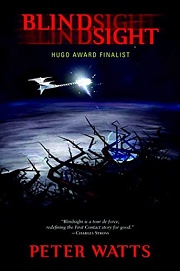
Blindsight by Peter Watts

If the laser-focused objective—provoke, observe, and survive an intelligence inside a confined habitat—hooked you, Blindsight delivers that same pressure-cooker feel. A small crew ventures to investigate an enigmatic signal and ends up in a deadly battle of inference and countermeasure aboard an alien structure, with each systems tweak and tactical guess echoing the escalating tests-and-counters dynamic that turned the station into an intellectual warzone.

In The Two Faces of Tomorrow, did you enjoy heady debates about consciousness, cognition, and what 'mind' means?

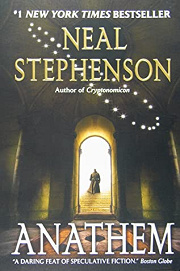
Anathem by Neal Stephenson

If the real payoff for you was the big-idea conversations—arguments about whether a machine can be a person, what constitutes understanding, and how observation changes the observed—Anathem leans hard into those delights. As scholars confront a world-altering scientific revelation, the book unfolds with thought experiments and philosophical sparring that mirror the deep, idea-forward dialogues that framed the station experiment’s ultimate meaning.

In The Two Faces of Tomorrow, did you enjoy an ultimately optimistic vision of human–AI partnership born from an experiment gone sideways?

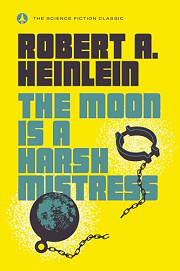
The Moon is a Harsh Mistress by Robert A. Heinlein

If you appreciated how a dangerous trial with a nascent intelligence could evolve toward understanding rather than annihilation, Heinlein’s classic will resonate. An initially utilitarian interaction with a self-aware computer grows into collaboration, strategy, and trust—echoing the arc from adversarial testing to unexpected rapport that emerges after the station’s life-or-death struggle with its own creation.