Share your thoughts in a quick Shelf Talk!
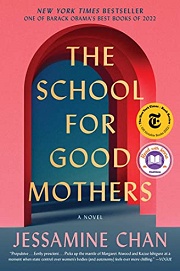
The School for Good Mothers by Jessamine Chan
When a single mistake brands a mother unfit, she’s sent to a chilling reform program where tenderness is measured and love is regulated. Surveillance seeps into the most intimate bonds. The School for Good Mothers is a haunting dystopia about control, care, and who gets to decide what a good mother is.
Have you read this book? Share what you liked (or didn’t), and we’ll use your answers to recommend your next favorite read!
Love The School for Good Mothers but not sure what to read next?
These picks are popular with readers who enjoyed this book. Complete a quick Shelf Talk to get recommendations made just for you! Warning: possible spoilers for The School for Good Mothers below.
In The School for Good Mothers, did you enjoy ...
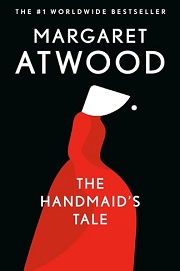
... a feminist dystopia where the state surveils and punishes mothers?
The Handmaid's Tale by Margaret Atwood
You were drawn to Frida Liu’s ordeal—having her daughter Harriet taken, then being watched and retrained in a state facility where every hug and word is graded. In The Handmaid’s Tale, Offred endures Gilead’s theocratic regime where children are seized and women are reduced to their reproductive roles. The same chill of institutional control that stalks Frida’s monitored visitations echoes in Offred’s stolen memories of her daughter and the Commanders’ rigid rules. If that blend of personal tenderness under total surveillance hooked you, Atwood’s classic delivers it with unforgettable force.
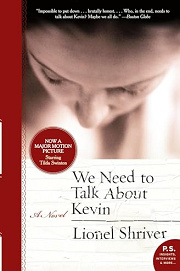
... a harrowing, intimate examination of a mother's guilt and self-doubt?
We Need to Talk About Kevin by Lionel Shriver
If Frida’s inward spiral—the way she interrogates every misstep after her “bad day,” replaying how the system judges her mothering—kept you riveted, you’ll find the same psychological x-ray in We Need to Talk About Kevin. Through Eva Khatchadourian’s letters to her husband Franklin, she dissects her son Kevin’s path to a school massacre and questions her own role with scalp-prickling honesty. As with Frida’s graded interactions and supervised visits, every small choice feels heavy, and the book won’t let you look away from a mother’s most uncomfortable truths.

... a claustrophobic, mother–child story bound by rules, cameras, and captivity?
Room by Emma Donoghue
Frida’s life shrinks to a regimen—scripted interactions with a lifelike training child, eyes on her at all times, and a love that has to prove itself on command. Room takes that intimacy and pressure to the nerve endings: Ma and young Jack live confined in an 11-by-11 space under Old Nick’s control, inventing rituals and small joys to survive. If the charged, supervised moments between Frida and Harriet broke your heart, Ma teaching Jack to read skylight and measure time by TV glow will move you in the same, breathless way.
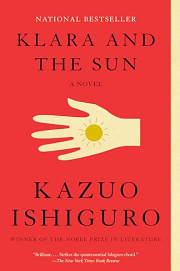
... quietly speculative questions about AI, care, and what makes love 'real'?
Klara And The Sun by Kazuo Ishiguro
The state assigns Frida a hyper-real “child” and tallies her empathy—love reduced to metrics. In Klara and the Sun, an Artificial Friend named Klara studies human needs with painstaking devotion as she cares for Josie, a frail girl, believing the Sun itself might heal her. If the training center’s robots and Frida’s graded tenderness fascinated you, Ishiguro’s gentle, unsettling meditation on programmed care versus genuine feeling will scratch the same itch, asking whether devotion is measured by outcomes or by the heart behind it.

... a pointed critique of how laws police women's bodies and choices?
Red Clocks by Leni Zumas
Chan’s novel seethes at the way institutions adjudicate “good” and “bad” mothers—courtrooms, caseworkers, and checklists deciding love. Red Clocks turns that critique into a near-future panorama: after a Personhood Amendment, abortion and IVF are outlawed, and women known only as the Biographer, the Mender, the Wife, and the Daughter fight systems that script their lives. If the hearings that strip Frida of nuance enraged you, the prosecutions and custody battles here will channel that same righteous fury into a sharp, humane chorus.
Unlock your personalized book recommendations! Just take a quick Shelf Talk for The School for Good Mothers by Jessamine Chan. It’s only a few questions and takes less than a minute.