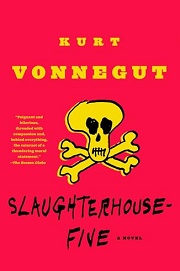
Slaughterhouse-Five by Kurt Vonnegut

"Unstuck in time and haunted by the absurdities of war, one man tumbles through moments that refuse to line up neatly—or make sense. Slaughterhouse-Five is a mordant, humane classic that blends science fiction, satire, and sorrow into a singular meditation on memory, fate, and the cost of conflict."

Have you read this book? Share what you liked (or didn’t) and get personalized recommendations.

Start or resume Shelf Talk
Love Slaughterhouse-Five but unsure what to read next?

These picks are popular with readers who enjoyed this book. Possible spoilers below.

In Slaughterhouse-Five, did you enjoy the looping, out-of-order wartime storytelling and absurdist logic?

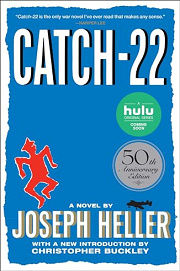
Catch-22 by Joseph Heller

If Billy Pilgrim’s jumbled jumps between Dresden and Tralfamadore hooked you, you’ll savor the way Catch-22 spirals through Yossarian’s war—circling back to the Snowden chapter until its full horror clicks into place. The same bleak chuckle you felt at “so it goes” meets Heller’s bureaucratic riddles—Major Major, Doc Daneeka, and the titular catch—that turn military madness into razor-edged comedy.

In Slaughterhouse-Five, did you enjoy the deadpan, morbid humor about apocalypse and human folly?

Cat's Cradle by Kurt Vonnegut

You laughed at the cosmic shrug that follows Billy’s worst moments; Cat’s Cradle wields that same grin as it dances toward doomsday. With the cult of Bokonon, Dr. Hoenikker’s ice-nine, and a chain of well-meaning idiots, Vonnegut skewers science, religion, and responsibility with the same laconic bite that made “so it goes” linger after Dresden.

In Slaughterhouse-Five, did you enjoy time travel used to confront trauma and history's grip on the present?

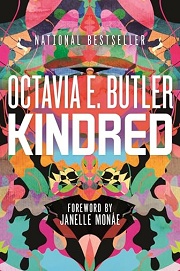
Kindred by Octavia E. Butler

If Billy becoming “unstuck in time” made you feel how past and present collapse into one wound, Kindred turns that sensation into raw urgency. Dana is yanked from 1976 Los Angeles to an antebellum Maryland plantation whenever her white ancestor’s life is in danger, forcing her—like Billy in Dresden—to survive history’s brutality and reckon with what it means to keep your humanity intact.

In Slaughterhouse-Five, did you enjoy the blend of satire and big questions about good, evil, and free will?

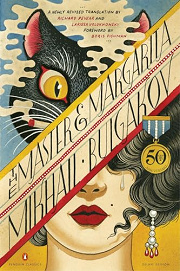
The Master and Margarita by Mikhail Bulgakov

If the Tralfamadorians’ fatalistic view and Billy’s drifting acceptance made you ponder fate and morality, The Master and Margarita pushes those questions with wicked flair. The Devil (Woland) strolls into Soviet Moscow to expose hypocrisy, while the parallel tale of Pontius Pilate interrogates cowardice and choice—mixing the same sardonic bite and cosmic perspective that shadowed Dresden’s ashes.

In Slaughterhouse-Five, did you enjoy the fragmented, vignette-like approach to memory and combat?

The Things They Carried by Tim O'Brien

If the shard-like chapters of Slaughterhouse-Five—snapshots of Billy, Roland Weary, and Dresden—moved you, The Things They Carried works that same mosaic. O’Brien’s linked stories about Kiowa, Lt. Cross, and the narrator blur what “really happened” with what needs to be told, capturing the way war memory loops, distorts, and refuses to let go.