Schild's Ladder by Greg Egan

When an audacious physics experiment births a new kind of vacuum, reality itself starts to rewrite the rules. As scientists race to understand the cosmos they’ve unleashed, ideas collide at the edge of comprehension. Schild’s Ladder is hard SF at its most dazzling and uncompromising.

Have you read this book? Share what you liked (or didn’t) and get personalized recommendations.

Start or resume Shelf Talk
Love Schild's Ladder but unsure what to read next?

These picks are popular with readers who enjoyed this book. Possible spoilers below.

In Schild's Ladder, did you enjoy rigorously scientific first contact that treats nonhuman minds like a physics problem to be solved?

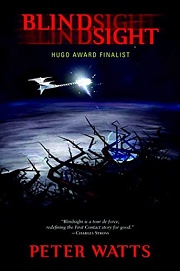
Blindsight by Peter Watts

If it was the way the novel’s lab-born vacuum state was explored like a real environment—complete with expeditions, measurements, and the moral split between destroying it or venturing deeper—that hooked you, you’ll love how Blindsight dissects contact with the unknowable. A surgically altered interpreter, Siri Keeton, joins the starship Theseus under the predatory leadership of Jukka Sarasti to investigate the structure dubbed Rorschach. The crew attack the alien encounter with the same hypothesis‑driven, instrument‑heavy rigor you enjoyed, pushing through biology, computation, and signal analysis to ask whether intelligence requires consciousness at all.

In Schild's Ladder, did you enjoy deep ontological debates woven into hands‑on investigation of reality?

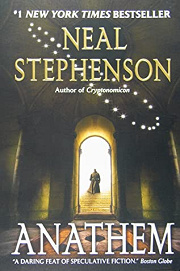
Anathem by Neal Stephenson

If the book’s arguments over whether a newly created physical regime counts as life—and what obligations we have to it—kept you thinking long after the expedition suits came off, Anathem will hit the same nerve. Fraa Erasmas and his cloister of scholars emerge from seclusion to grapple with multiverses, consciousness, and the structure of reality itself, unfolding vigorous dialogues that culminate in an off‑world investigation. It marries idea‑dense philosophy to empirical problem‑solving the way those debates about preserving vs. annihilating the new vacuum did.

In Schild's Ladder, did you enjoy mind‑bending journeys where radical physics becomes the landscape of exploration?

Diaspora by Greg Egan

If you were awed by the expedition pushing into a region governed by different fundamental rules—and mapping its geometry like cartographers of reality—Diaspora amplifies that sense of discovery. The polis‑born posthumans like Yatima set out across cosmological extremes, from higher‑dimensional habitats to universe‑level phase changes, treating physics itself as terrain. It delivers that same vertiginous awe at encountering structures and life that only make sense under alternate laws.

In Schild's Ladder, did you enjoy encountering truly alien minds across drastically different physical regimes?

A Fire Upon the Deep by Vernor Vinge

If the emergent phenomena inside the new vacuum felt like meeting an alien civilization born of different invariants, Vinge’s classic offers a complementary thrill. The galaxy’s "Zones of Thought" impose varying physical limits, and the story spans from godlike "Powers" to the pack‑minds of the Tines, all while a rescue mission (Johanna and Jefri) unfolds under existential threat from the Blight. It’s the same blend of discovery and peril when crossing into domains where the rules—and the minds—aren’t ours.

In Schild's Ladder, did you enjoy idea‑driven thought experiments pursued to their logical, unsettling conclusions?

Permutation City by Greg Egan

If you relished the cerebral payoff—deriving consequences from a single bold experiment and following them without flinching—Permutation City is a perfect next step. Paul Durham’s radical "Dust Theory" and the creation of Copies like Maria Deluca lead to a bootstrapped reality and the Autoverse, where life emerges under alternate rules. It echoes those debates over whether the lab‑born domain deserves preservation, then goes further, asking what counts as a world—and who counts as alive—when the axioms change.