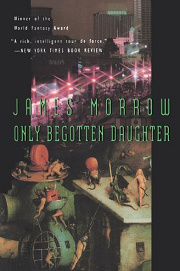
Only Begotten Daughter by James K. Morrow

When a most unlikely miracle occurs, a modern woman finds herself raising a child destined to draw the world’s fiercest hopes and fears. Irreverent, humane, and bitingly funny, this is a satire that asks big questions about faith, freedom, and responsibility. Only Begotten Daughter is audacious and unforgettable.

Have you read this book? Share what you liked (or didn’t) and get personalized recommendations.

Start or resume Shelf Talk
Love Only Begotten Daughter but unsure what to read next?

These picks are popular with readers who enjoyed this book. Possible spoilers below.

In Only Begotten Daughter, did you enjoy irreverent theological satire where divine tests upend a mortal's life?

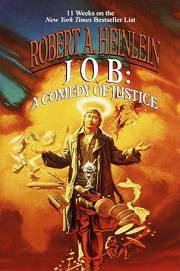
Job: A Comedy of Justice by Robert A. Heinlein

If Julie Katz’s God-haunted upbringing with Murray in Atlantic City and her run-ins with the Devil made you relish bold, blasphemous play with doctrine, you’ll have a blast with Heinlein’s romp. In Job: A Comedy of Justice, a hapless believer is yanked across realities by capricious higher powers, much like Julie is buffeted between miracle, temptation, and public crusade. The book skewers scripture, piety, and cosmic bureaucracy with the same audacity that sent Julie sparring with zealots and the Prince of Lies.

In Only Begotten Daughter, did you enjoy a searching, faith-shaking confrontation with the divine and inexplicable?

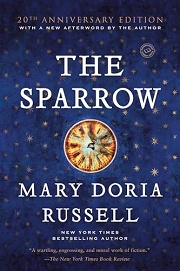
The Sparrow by Mary Doria Russell

You followed Julie’s struggle to reconcile miracles, suffering, and responsibility under the glare of fundamentalists and the Devil’s needling. In The Sparrow, Jesuit linguist Emilio Sandoz faces an equally harrowing crisis of faith after first contact with an alien world. Like Julie’s painful choices about how to use (or refuse) her gifts, Sandoz’s journey probes free will, theodicy, and the cost of belief—quiet, devastating, and deeply humane.

In Only Begotten Daughter, did you enjoy cheeky, end-times comedy with angels, demons, and sharp digs at zealotry?

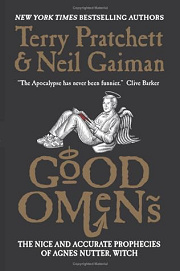
Good Omens by Neil Gaiman & Terry Pratchett

If the gallows humor in Julie’s divine parentage, her brushes with Satan, and the media circus of would‑be crusaders made you grin, Good Omens doubles down on that vibe. An angel and a demon team up to avert the Apocalypse, lampooning prophecy, televangelists, and moral panic with the same irreverent sparkle that made Julie’s confrontations with holy busybodies both biting and funny.

In Only Begotten Daughter, did you enjoy a razor-edged exploration of belief, institutions, and the nature of gods?

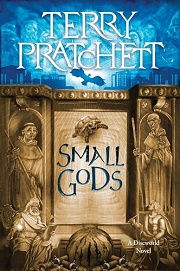
Small Gods by Terry Pratchett

Julie’s life as God’s daughter—raised by a skeptic, harried by zealots, tempted by the Adversary—asks hard questions about belief and power. Small Gods does too: a great god dwindles to a feeble presence and must rethink faith with a single earnest follower. Like Julie’s wrestling with miracles and moral agency, this tale dissects organized religion, conscience, and compassion with wit and philosophical bite.

In Only Begotten Daughter, did you enjoy a devilish, allegorical fantasia that skewers society and faith with surreal set pieces?

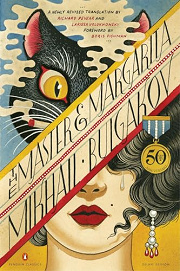
The Master and Margarita by Mikhail Bulgakov

If you loved how Julie’s story used a divine lineage, Satanic temptations, and public hysteria to mirror real-world dogma, The Master and Margarita offers a richly symbolic counterpart. The Devil arrives in Moscow with a chaotic entourage, exposing hypocrisy through dazzling, dreamlike episodes—much as Julie’s miracles and trials cast a satirical, allegorical light on belief, cruelty, and redemption.