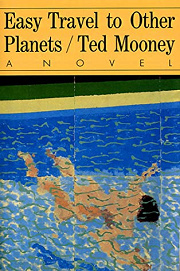
Easy Travel to Other Planets by Ted Mooney

In a media-saturated near future, desire and disconnection collide as people seek meaning in ever-stranger places. Provocative and darkly satirical, Easy Travel to Other Planets explores intimacy, spectacle, and the costs of endless information.

Have you read this book? Share what you liked (or didn’t) and get personalized recommendations.

Start or resume Shelf Talk
Love Easy Travel to Other Planets but unsure what to read next?

These picks are popular with readers who enjoyed this book. Possible spoilers below.

In Easy Travel to Other Planets, did you enjoy the exploration of human consciousness and the unknowable nature of alien intelligence?

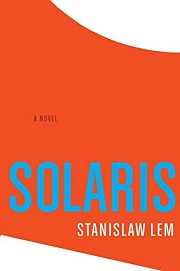
Solaris by Stanisław Lem

If you were fascinated by the way Easy Travel to Other Planets explores the limits of communication and human understanding (as seen in the relationship between humans and dolphins), you'll be captivated by Solaris. Lem’s classic follows psychologist Kris Kelvin as he tries to make sense of the mysterious planet Solaris, whose ocean manifests physical representations of the crew’s subconscious. The novel delves into philosophical questions about the nature of reality, memory, and the impossibility of true connection with the alien, making it an ideal match for your interests.

In Easy Travel to Other Planets, did you enjoy the intricate depiction of alien cultures and the challenge of understanding the 'other'?

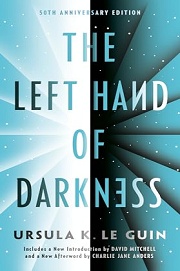
The Left Hand Of Darkness by Ursula K. Le Guin

If you appreciated the way Easy Travel to Other Planets immerses you in unfamiliar modes of being and communication, you'll love The Left Hand of Darkness. Le Guin transports you to the planet Gethen, where gender is fluid and the customs are radically different from Earth. Through Genly Ai’s attempts to bridge cultural gaps, you’ll find the same sense of wonder and challenge in encountering truly alien perspectives.

In Easy Travel to Other Planets, did you enjoy the psychological depth of characters grappling with profound isolation and longing?

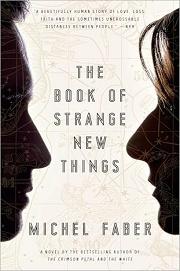
The Book of Strange New Things by Michel Faber

If you were moved by the internal struggles of Mooney’s characters—especially the emotional and psychological barriers they face—The Book of Strange New Things will resonate. Peter, a missionary sent to evangelize an alien species on a distant planet, struggles with personal loss, spiritual crisis, and the limits of human connection. Faber’s intense character study and emotional nuance will speak to your appreciation for psychological depth.

In Easy Travel to Other Planets, did you enjoy the haunting, ambiguous morality at the heart of human relationships?

Never Let Me Go by Kazuo Ishiguro

If you were drawn to the morally complex relationships and ethical dilemmas in Easy Travel to Other Planets—such as the taboo human-dolphin romance—you’ll be gripped by Never Let Me Go. Ishiguro’s quietly devastating novel follows Kathy, Ruth, and Tommy as they navigate love, jealousy, and complicity within a system that exploits them. The blurred moral boundaries and poignant introspection will echo the ambiguities you enjoyed.

In Easy Travel to Other Planets, did you enjoy the use of symbolic language and allegory to explore post-apocalyptic society?

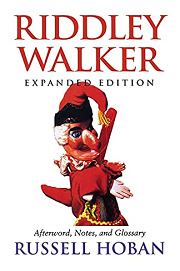
Riddley Walker by Russell Hoban

If you admired the layered symbolism and allegorical storytelling in Mooney’s work—where every interaction carries deeper meaning—Riddley Walker will enthrall you. Set in a linguistically fractured, mythic England after nuclear catastrophe, Hoban’s novel uses invented language and rich allegory to probe the reconstruction of meaning and myth. It’s a challenging, rewarding read for anyone who loves allegorical depth.