Share your thoughts in a quick Shelf Talk!
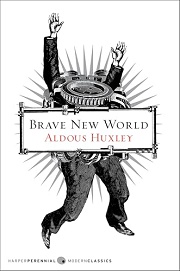
Brave New World by Aldous Huxley
In a world engineered for happiness—down to your genes—pleasure and order come at a price few dare to question. When doubt creeps in, cracks appear in the perfect façade. Brave New World is a haunting, enduring classic that challenges comfort with conscience.
Have you read this book? Share what you liked (or didn’t), and we’ll use your answers to recommend your next favorite read!
Love Brave New World but not sure what to read next?
These picks are popular with readers who enjoyed this book. Complete a quick Shelf Talk to get recommendations made just for you! Warning: possible spoilers for Brave New World below.
In Brave New World, did you enjoy ...
... the biting satire of consumerism and engineered desire?
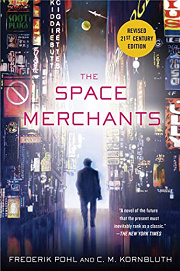
The Space Merchants by Frederik Pohl and C. M. Kornbluth
If you loved how Huxley skewers the "feelies," hypnopaedia, and slogans like "Ending is better than mending" to lampoon a buy-more society, you'll click with the ad-world absurdity of The Space Merchants. Watching Mitch Courtenay spin campaigns that literally sell colonizing Venus echoes the way Mustapha Mond’s world manufactures happiness—both systems mold people into perfect consumers, and the jokes land precisely because the control is so seamless.
... a tightly controlled society that sacrifices truth and individuality for stability?
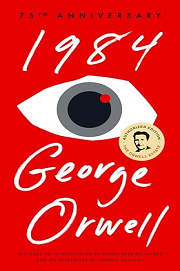
Nineteen Eighty Four by George Orwell
You were drawn to how Brave New World trades freedom for comfort—soma holidays, caste-conditioning, and Mond’s cool defense of control over chaos. In Nineteen Eighty-Four, Winston Smith faces a different—but equally suffocating—order: Newspeak, the Ministry of Truth, and Room 101. If John the Savage’s clash with the World Controller gripped you, Winston’s doomed pushback against O’Brien’s logic will hit the same nerve.
... a quietly devastating, socially engineered system that people accept without revolt?
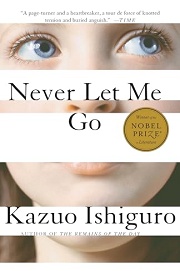
Never Let Me Go by Kazuo Ishiguro
If the Bokanovsky Process, predestined castes (Alpha to Epsilon), and Lenina’s serene acceptance fascinated you, Never Let Me Go delivers that same chill in a whisper. Kathy, Tommy, and Ruth’s "donations" mirror Huxley’s manufactured lives—no need for Thought Police when conditioning does the work. The revelations unfold with the same soft, inexorable logic that made Huxley’s world so haunting.
... a rigidly stratified caste system enforcing roles—especially over bodies and reproduction?
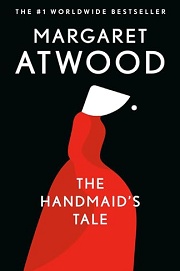
The Handmaid's Tale by Margaret Atwood
If the Hatchery, controlled birth, and caste-labeled destinies in Brave New World stood out—how Bernard, Lenina, and the Epsilon laborers are made to fit—then Offred’s world in The Handmaid’s Tale offers a stark counterpart. Commanders, Wives, Aunts, and Handmaids enforce a biological hierarchy; like Huxley’s society, it rationalizes oppression as order, making each small act of defiance feel electric.
... the question of whether pleasure and entertainment can replace meaning, art, and dissent?
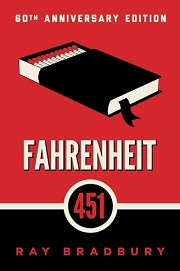
Fahrenheit 451 by Ray Bradbury
If Mond’s debate with John about why art and tragedy are dangerous—and the numbing lure of soma and the "feelies"—captivated you, Fahrenheit 451 is a perfect match. Guy Montag’s journey from burning books to seeking them, Mildred’s immersive parlor walls, and Clarisse’s unsettling questions echo Huxley’s challenge: can curated bliss stand in for a real, difficult life?
Unlock your personalized book recommendations! Just take a quick Shelf Talk for Brave New World by Aldous Huxley. It’s only a few questions and takes less than a minute.