Share your thoughts in a quick Shelf Talk!
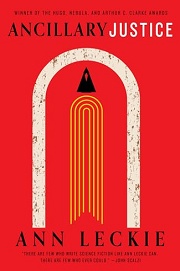
Ancillary Justice by Ann Leckie
A starship’s AI awakens to vengeance in a single human body—far from the vast mind it once was. Inventive pronouns, imperial politics, and coolly precise action make Ancillary Justice a startlingly fresh space opera.
Have you read this book? Share what you liked (or didn’t), and we’ll use your answers to recommend your next favorite read!
Love Ancillary Justice but not sure what to read next?
These picks are popular with readers who enjoyed this book. Complete a quick Shelf Talk to get recommendations made just for you! Warning: possible spoilers for Ancillary Justice below.
In Ancillary Justice, did you enjoy ...
... an AI narrator wrestling with autonomy, personhood, and embodiment?
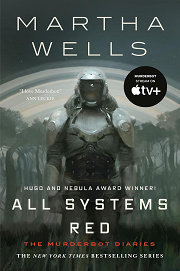
All Systems Red by Martha Wells
If what hooked you was Breq’s fragmented self—once the ship Justice of Toren, now confined to one body—then you’ll love the voice of the SecUnit in All Systems Red. Like Breq scavenging a Presger gun and choosing who to save (think of Seivarden on Nilt), Murderbot hacks its own governor module and has to decide what it wants to be, not what it was built to obey. It’s snarkier than Radchaai propriety, but the same intimate, first-person struggle with agency and identity drives every page.
... knife‑edge imperial court politics, cultural assimilation, and identity as a tool of power?
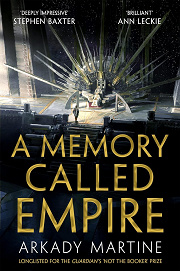
A Memory Called Empire by Arkady Martine
If you relished the scheming around Anaander Mianaai’s split empire and the palace maneuvering that traps Breq on Omaugh Palace and Ors Station, A Memory Called Empire delivers that same treacherous elegance. Ambassador Mahit Dzmare navigates the glittering Teixcalaanli court while an illegal memory implant whispers in her head—much like Breq’s ancillary echoes—turning identity into a political weapon. It’s all sly etiquette, coded poems, and covert coups, with the moral stakes of annexation as sharp as any Radchaai tea set.
... rigorous, human-centered debates about justice, freedom, and what a good society demands?
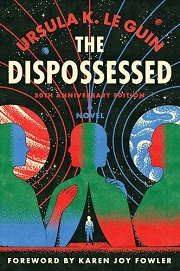
The Dispossessed by Ursula K. Le Guin
If the questions behind Breq’s journey—what "justice" means after Shis’urna, whether obedience absolves culpability, whether empire can be ethical—kept echoing after you closed the book, The Dispossessed is your next step. Le Guin’s physicist Shevek crosses between contrasting societies to test ideas of ownership, duty, and solidarity, much as Breq tests Radchaai virtues against Lieutenant Awn’s fate. It’s less gunfights, more thought experiments—but the moral clarity and ambiguity are equally piercing.
... an alternating, time-jumping structure that keeps recontextualizing the protagonist’s past?
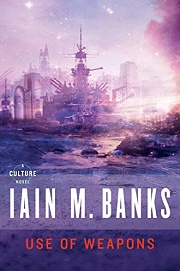
Use Of Weapons by Iain Banks
If the split timelines—Breq’s present hunt versus her memories as One Esk under Lieutenant Awn—hooked you, Use of Weapons sharpens that blade. Banks alternates timelines around the operative Cheradenine Zakalwe, each pass reframing his motives the way Breq’s flashbacks reframe the catastrophe that destroys Justice of Toren. Politics, black ops, and a final reveal that hits as hard as any Radchaai truth-test make it a masterclass in structure-driven shock.
... the fraught ethics of empire, assimilation, and diplomacy across cultures?
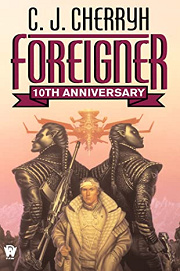
Foreigner by C. J. Cherryh
If the Radch annexations, propriety codes, and the tragedy on Shis’urna (and what it says about "civilizing" missions) gripped you, Foreigner dives into that tension. Human diplomat Bren Cameron stands between colonists and the alien atevi, parsing lethal etiquette the way Breq parses Radchaai custom—one misread honorific can spark a war. It’s all about language, power, and the costs of living inside someone else’s empire, without flinching from the gray areas that doomed Lieutenant Awn.
Unlock your personalized book recommendations! Just take a quick Shelf Talk for Ancillary Justice by Ann Leckie. It’s only a few questions and takes less than a minute.